Indoor Plants for Dubai Homes That Forgive the AC
Air-conditioning is a desert of its own: dry, draughty, dim in the corners. Most houseplants sulk in it. A reliable few genuinely do not mind, and they are the ones worth buying twice.
, Dubai
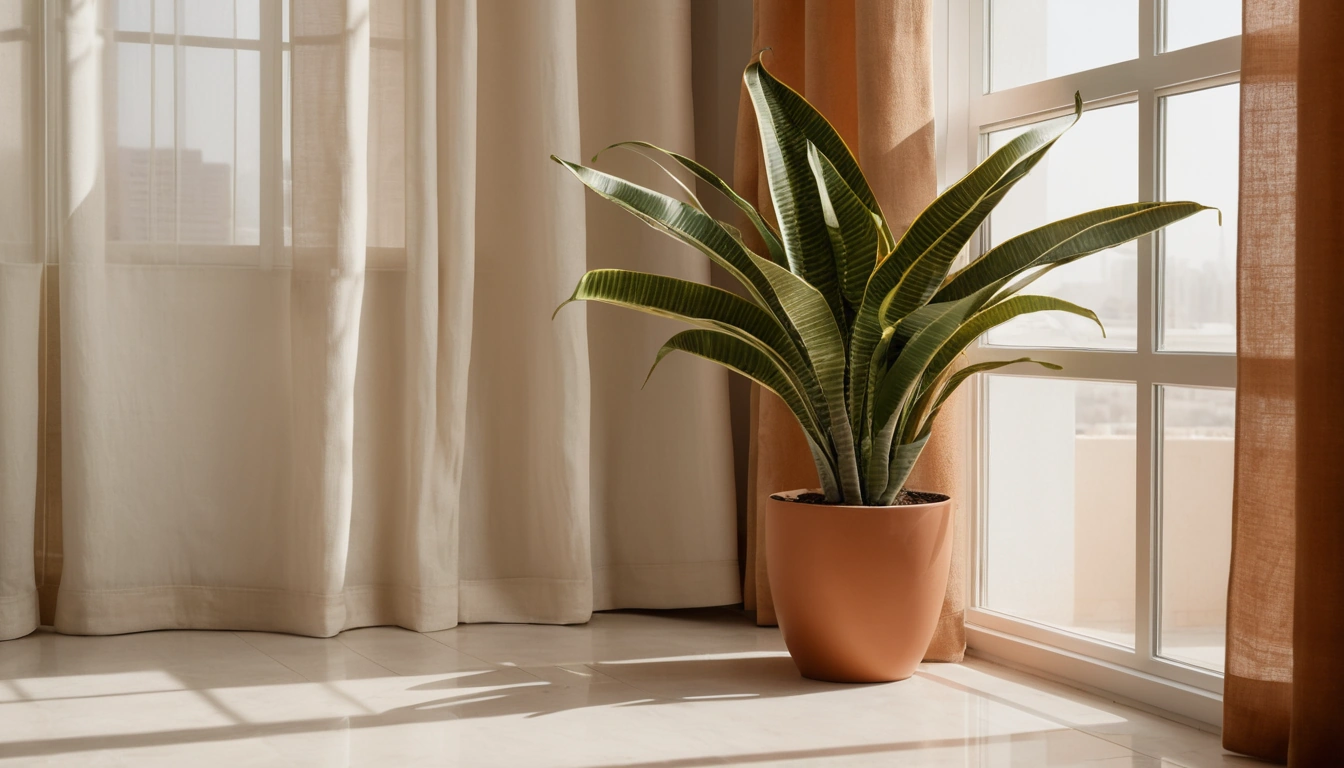
Every plant that dies in a Dubai flat gets blamed on the heat, and the heat is almost never the culprit. The killer lives indoors and hums. Air-conditioning manufactures a private climate, dry as a northern winter with the radiators on, draughtier than most balconies, and dim wherever the floor plan runs deep. Choosing indoor plants for Dubai homes therefore means choosing for the machine, not the postcard: the species that thrive are the ones that treat low humidity and artificial chill as a mild inconvenience rather than a betrayal.
The Three Real Enemies
Dry air comes first. A sealed, conditioned flat holds far less moisture than the tropical understorey most houseplants evolved for, and thin-leaved species announce this within weeks through browning tips and crisped edges. Misting is a pleasant ritual that changes little for the plant; grouping pots together, or standing them on a tray of wet pebbles, does slightly more, though the durable answer is simply choosing species with thick, waxy leaves that hold their own water.
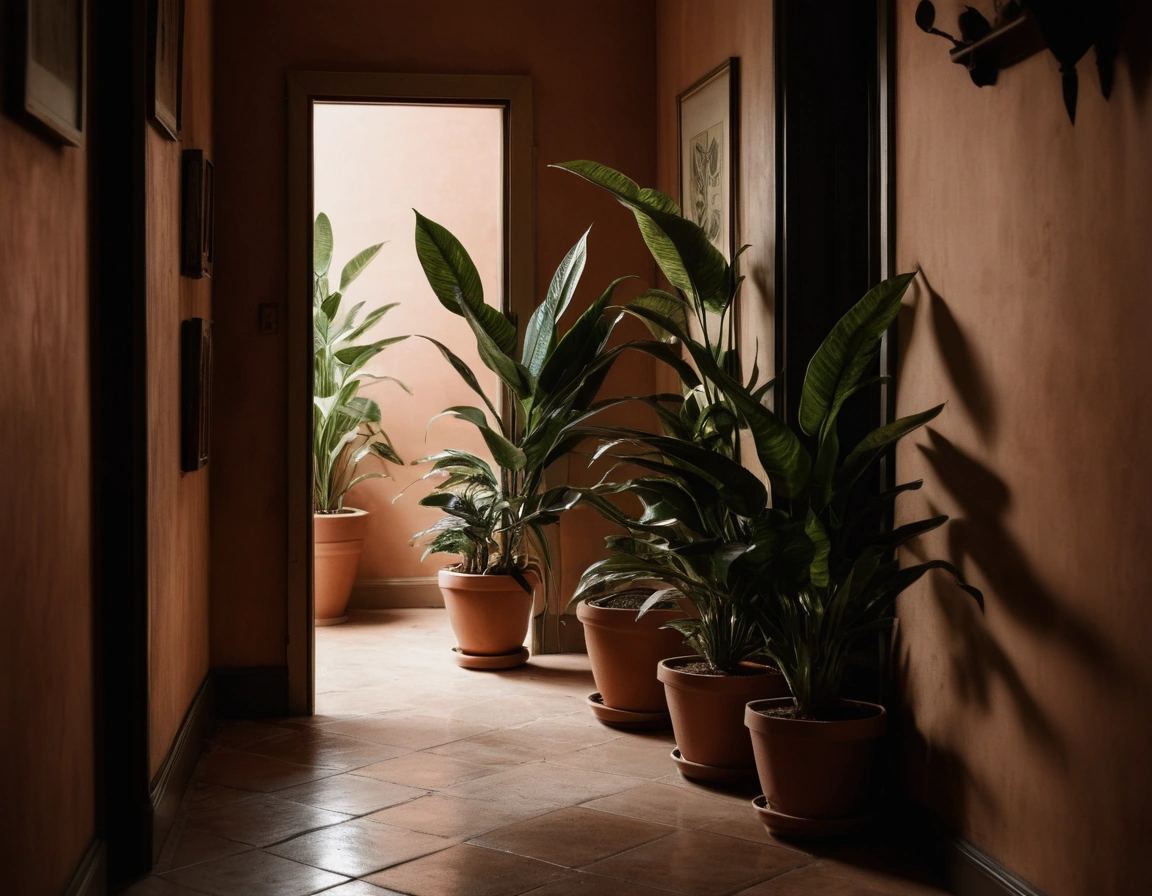
Cold draughts come second and are more insidious. A plant parked under a supply vent takes a chill with every cycle, and many species respond with steady leaf drop that owners misread as thirst. Moving the pot a metre or two out of the airstream is often the entire cure. It also helps if the air-conditioning itself is serviced; dusty vents film the leaves, and an erratic thermostat multiplies the draught problem it was supposed to manage.
Dark corners come third. Deep-plan flats put all the glass on one wall, and light falls away faster than eyes admit; a corner that looks bright to you at noon is permanent dusk to a plant. The best real estate is near the glass, where sheer curtains that tame the glare turn a scorching sill into the most comfortable seat in the flat.
The Forgiving Shortlist
Five species tolerate all three enemies with something close to indifference:
- ZZ plant: water-storing rhizomes, glossy leaves, and a genuine tolerance of dim corridors; it is killed by kindness far more often than by neglect.
- Snake plant: upright, architectural, content on a bright sill or in a dull hallway, and untroubled by weeks of dry air.
- Pothos: fast, trailing and communicative; it wilts slightly when thirsty and forgives you within hours of watering.
- Cast-iron plant: the name is the review; slow-growing, shade-tolerant and unbothered by almost anything indoors.
- Dracaena: height and structure without drama; tips may brown a little in very dry air while the plant carries on regardless.
The counter-example is the weeping fig. A ficus registers every change, a moved pot, a fortnight away, a vent switched to high, and answers each one by shedding leaves in quantities that suggest the end of the world. It recovers, usually, but it makes its owner complicit in a drama the ZZ plant simply declines to stage. Buy the ficus when the reliable five are already flourishing.
Watering for a Machine Climate
Air-conditioning changes the physics of a pot. The surface dries within a day while the root ball below stays wet, so the soil lies about its condition; a finger pushed two knuckles deep tells the truth the top layer will not. Overwatering kills more plants in conditioned flats than drought ever manages, because owners read a dusty surface as thirst and pour again. Water deeply and less often, let the excess drain fully, and empty the saucer, since roots standing in water rot in any climate.
August is the annual cull. Before travelling, water everything deeply, move pots off hot sills and out of vent airstreams, and cluster them together in the brightest room so they humidify each other. Self-watering spikes and reservoir pots bridge two or three weeks for the thirstier species; the reliable five mostly need nothing at all. A neighbour with a key still beats every gadget. The same discipline runs right through the household, and anyone with a terrace already knows it from a garden planned around the water bill: deep and rare beats shallow and often, indoors and out.
Terracotta or Plastic
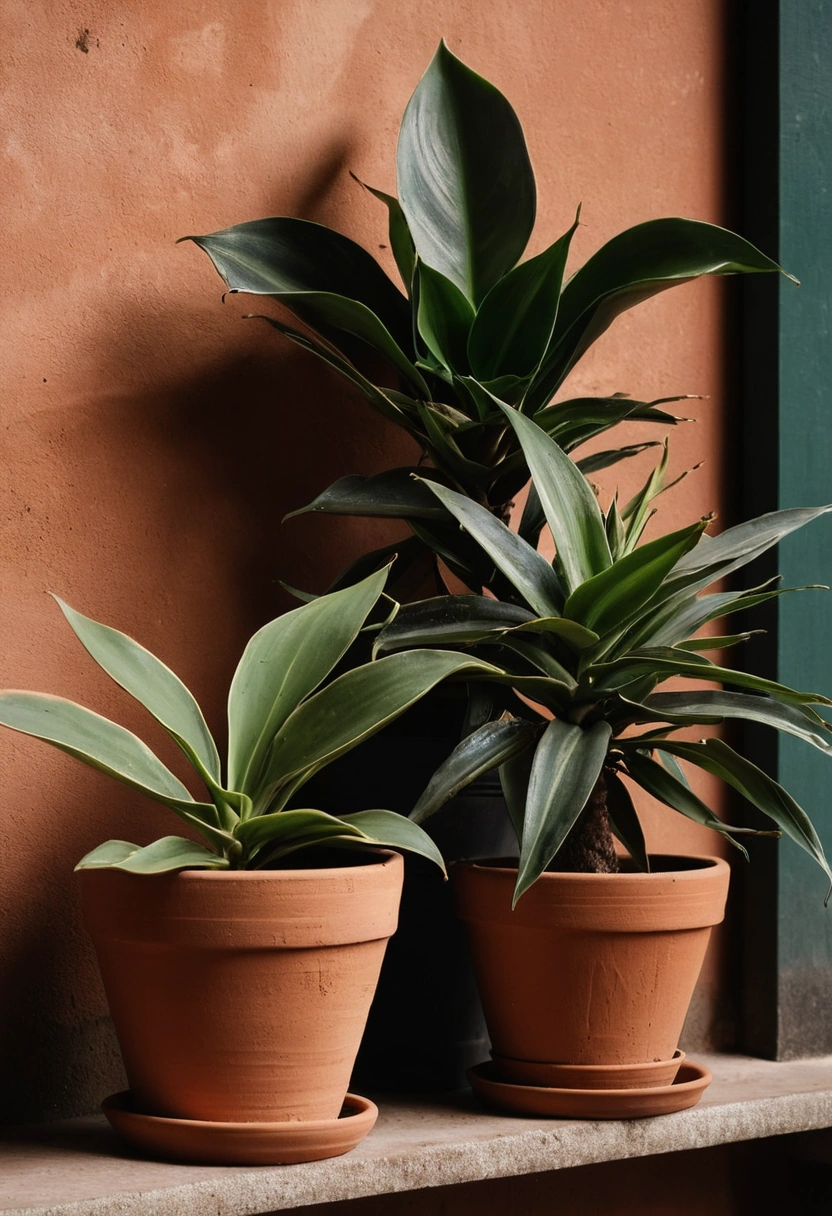
Terracotta breathes. Water evaporates through the clay wall, the root zone gets air, and the pot itself tells you its state, dark when damp, pale when dry. For the heavy-handed waterer this porosity is a safety net, and under air-conditioning that is the failure mode that matters most. The cost is speed: in machine-dry air a small terracotta pot can go from soaked to bone dry in days, which punishes thirsty species and absent owners.
Plastic and glazed pots hold moisture far longer, which suits pothos and dracaena, and suits anyone whose failure mode is forgetting rather than fussing. The honest rule is to match the pot to your own habits, not to the plant alone. Terracotta also simply looks right here, mineral and warm; a row of clay pots holds its own visually beside brass and books on a full shelf, where a nursery-black plastic sleeve never will.
None of this asks for a green thumb, only for honesty about the climate you actually live in. The flat is not the tropics and it is not the desert outside; it is a third thing, invented by the compressor. Stock it with the species that never noticed, and the jungle look survives August, the holidays and the thermostat wars without a single dramatic leaf hitting the floor.