Modern Majlis Furniture for the Way Dubai Gathers Now
The majlis is still the room a household is judged by. Furnishing one now means holding on to hierarchy and hospitality while the silhouettes, fabrics and lighting quietly modernise.
, Dubai
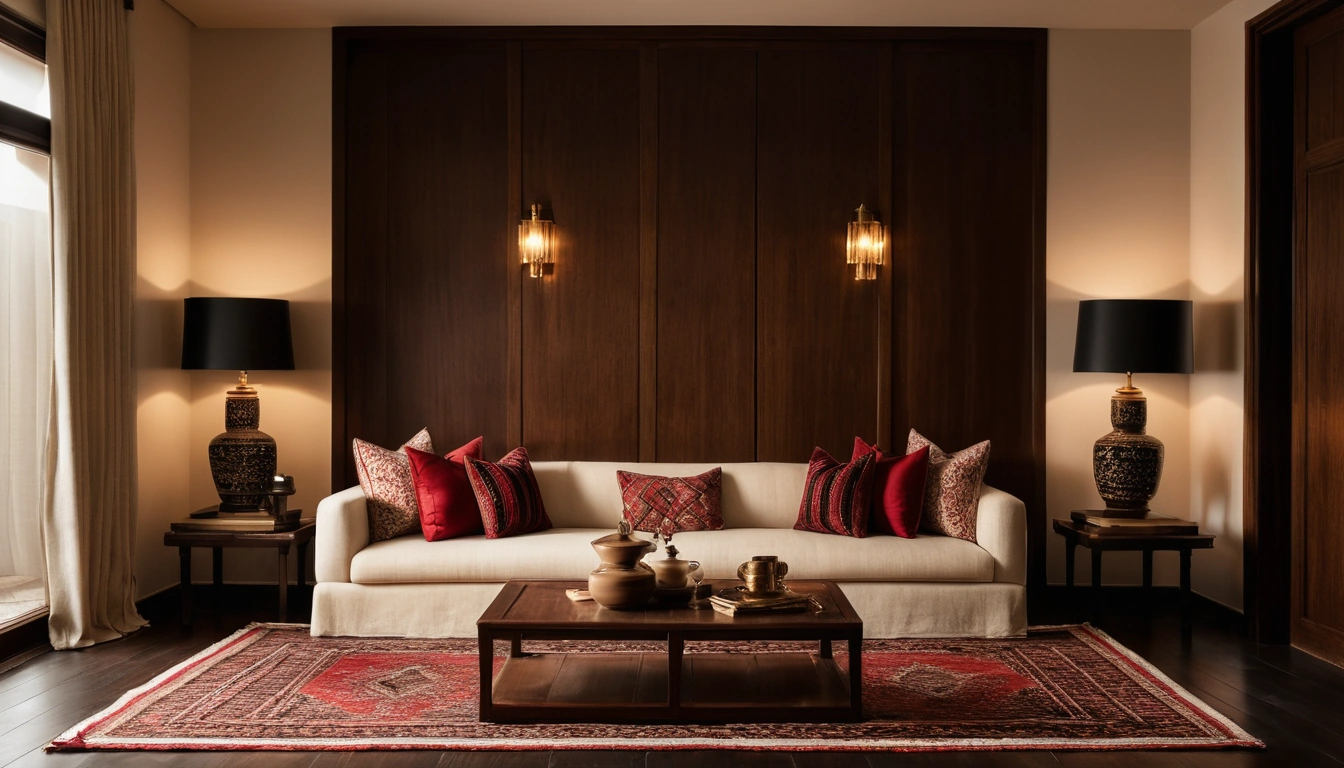
Every other room in a home can be forgiven its compromises; the majlis cannot. It is where a household’s hospitality is performed and quietly assessed, where guests are seated according to an order everyone understands and nobody mentions, and where three generations must sit together without anyone losing face. Choosing modern majlis furniture is therefore not an aesthetic exercise with a social footnote. It is the reverse: get the sociology right and the styling follows almost by itself.
The room the whole house answers to
The traditional arrangement solved problems that have not gone away. Seating ran around the perimeter because a majlis must absorb an unpredictable number of guests while keeping every face visible to every other; the centre stayed clear for coffee service; the position of honour sat furthest from the door, facing it, so arrivals could be seen and greeted properly. A contemporary interior can change silhouette and material as much as it likes, but if it abandons those functions the result is not a modern majlis, it is a lounge with regional styling.
Designers working on villas in Arabian Ranches or apartments in the Marina tend to respect this more than the furniture trade does. Catalogue seating is built for a nuclear family facing a television; majlis seating is built for conversation in the round. That single difference explains most of what follows.
Floor seating or the low sofa
Purists argue for the floor, and they have history on their side: cushions and bolsters along the wall, a woven rug underfoot, everything at one level. Floor seating remains the most flexible arrangement ever devised, since capacity is limited only by cushion count, and it still reads as the most generous form of welcome. Its weakness is anatomical rather than cultural. Knees and hips that have spent decades in office chairs do not fold gracefully, and elderly guests deserve better than a struggle to rise.
The low sofa is the working compromise. Seat heights around thirty five to forty centimetres keep the horizon of the room low and the posture upright, closer to attention than to slouch, which suits a room built on talk. Deep Western lounge sofas fail here; they swallow their occupants and tip them backwards into passivity. What a majlis wants is shallow depth, firm cushions and continuous back support along an unbroken line.
Most households now run a hybrid: low sofas along two or three walls, with floor cushions stored close at hand for the evenings when the room must take twice its usual number.
Built for the fortieth guest
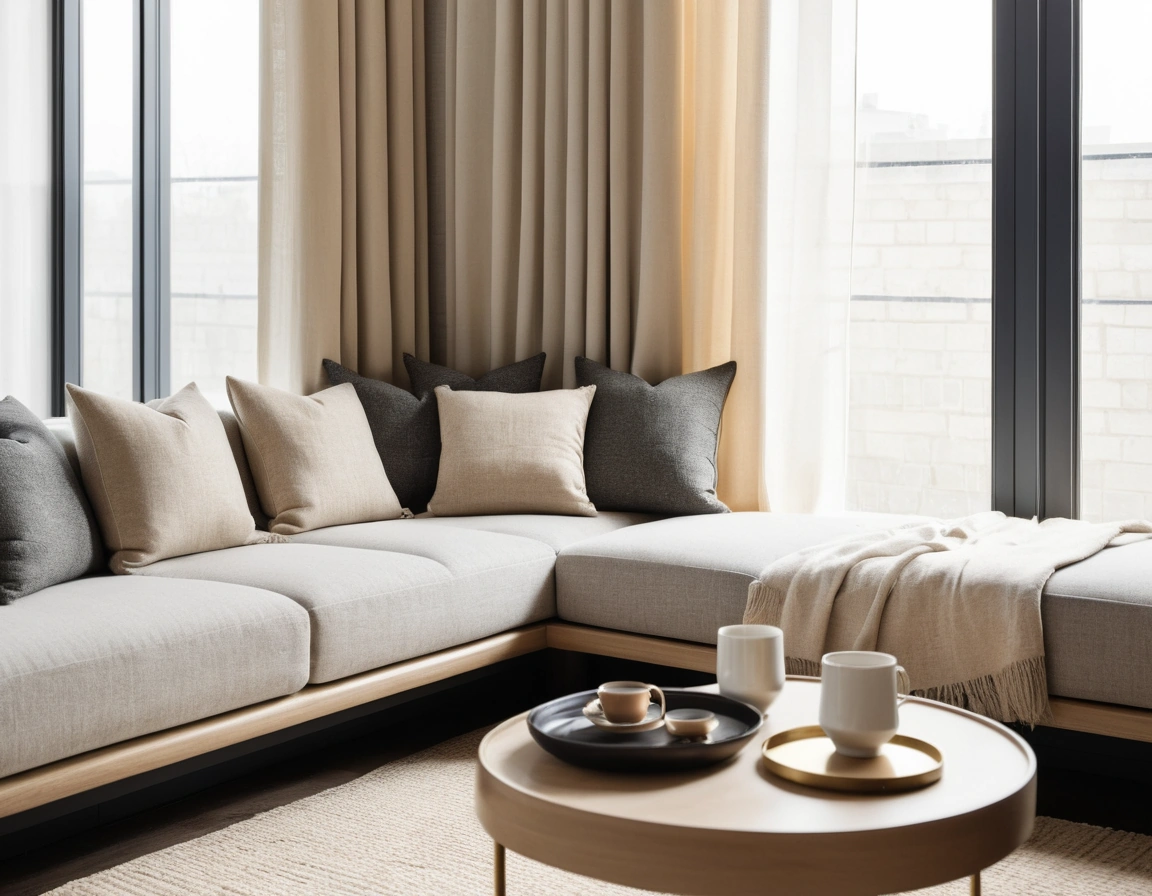
Modularity is the honest answer to a guest list that moves between four and forty. Armless units of a single depth can run wall to wall and turn corners without interruption, and ottomans matched to the seat height extend the line further when needed. A pair of generous storage chests, or a joinery bench with lift-up lids, keeps the reserve cushions inside the room rather than in a distant cupboard, which matters at nine in the evening when cars keep arriving.
Standard collections rarely fit these geometries, which is why so many majlis schemes end up being made rather than bought. The economics are less frightening than they sound; commissioning seating to the room’s measurements often costs no more than the imported equivalent once you stop paying for arms nobody leans on. It also means the fabric, the firmness and the exact height are decided by you rather than by a factory in another climate.
Fabric against coffee and crowds
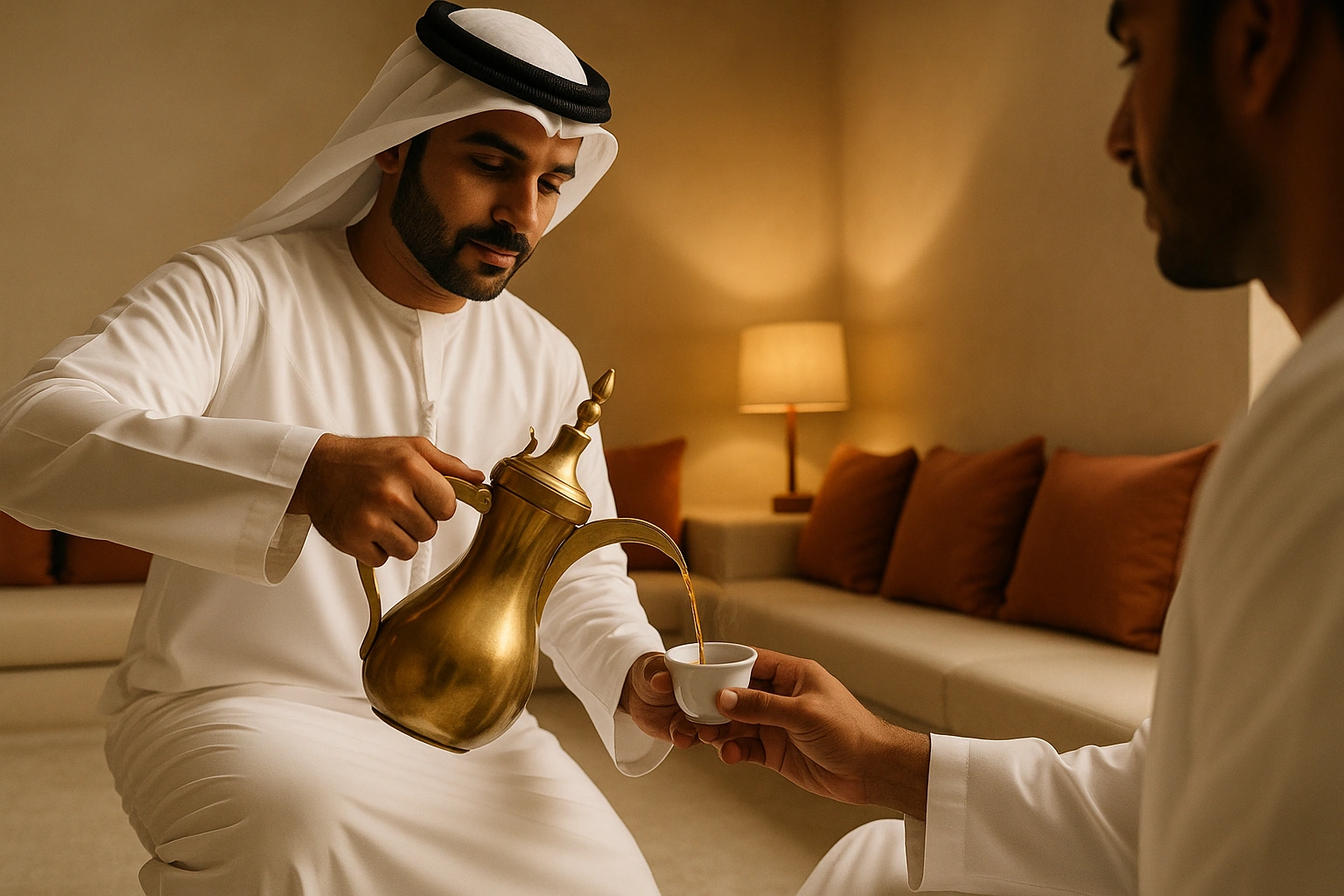
Gahwa is served constantly, cups are small, trays travel across the room, and children exist. Upholstery in a majlis lives a harder life than in any other room, so choose fabric the way contract designers do: by rub count and cleanability first, colour second. Tightly woven wools and hard-wearing synthetics with removable, washable covers will outlast anything delicate, and a small allover pattern hides the evidence of a busy season better than any plain pale cloth. Silk and white linen are for rooms with fewer visitors.
Pattern is also where identity enters. A band of sadu weaving reinterpreted as upholstery trim ties a contemporary scheme back to the tent without costuming the room, and the fabric shops of Satwa and Deira will match or make trims to order. The rule that governs all of it is dosage; the case for pattern applied with deliberate restraint is nowhere stronger than in a room this social.
Light for faces, and rank you can read
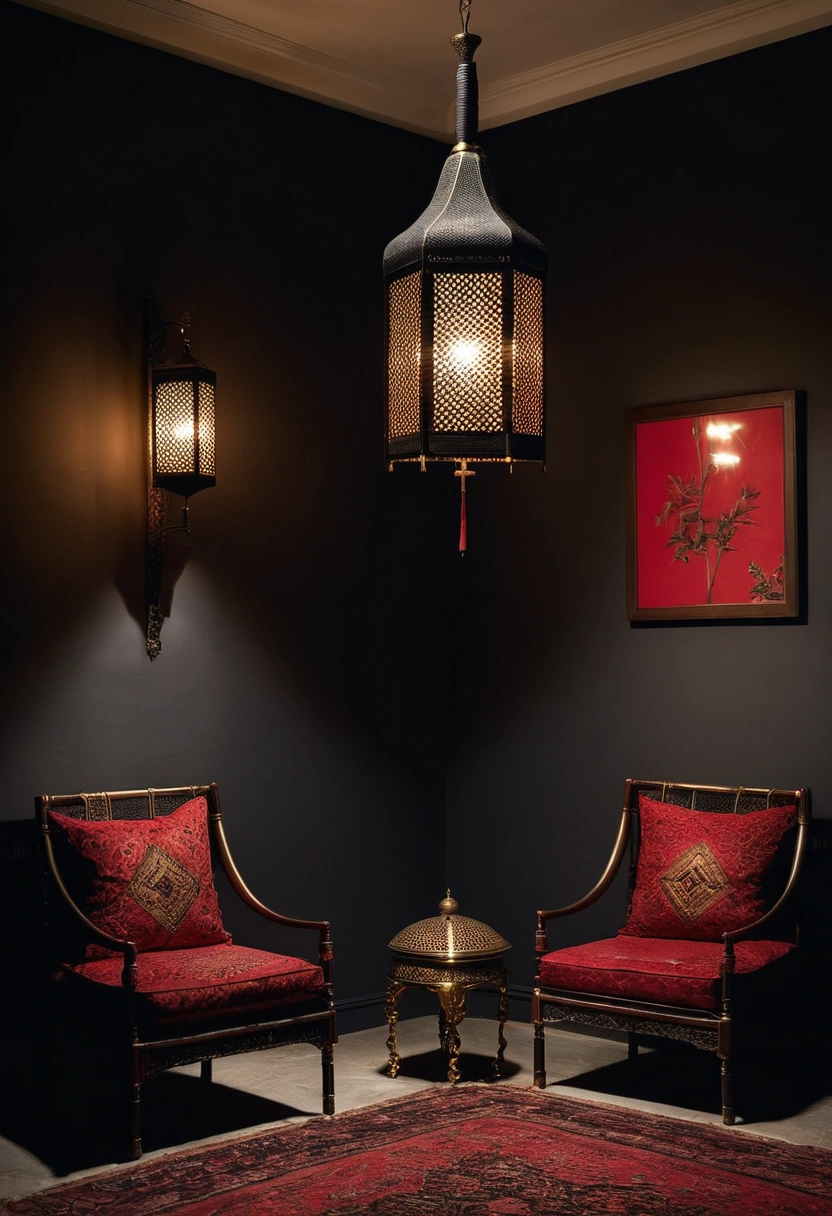
Overhead downlights are the enemy of this room; they light the rug handsomely and put every face above it into shadow. Conversation wants light at head height and warmth in its colour, which means wall lights, table lamps and floor lamps on dimmers, run warm and kept low. The wider argument for layered light instead of ceiling grids applies to the whole home, but the majlis is where it pays first.
Hierarchy, finally, should survive the redesign. Keep the seat of honour obvious: furthest from the door, facing it, marked by nothing more than a slightly deeper cushion and the best view of the room. Keep the centre clear so coffee can circulate, keep the perimeter unbroken so nobody sits outside the circle, and the room will do what it has always done. The furniture is new; the manners are not, and the best modern majlis furniture is simply the version of the room that lets those manners carry on in comfort.