Escaping the Downlight Grid: Lighting for Dubai Apartments
Developers hand over ceilings, not lighting schemes. A few lamps, disciplined colour temperature and a dimmer or two will do more for an apartment than any single piece of furniture you could buy.
, Dubai
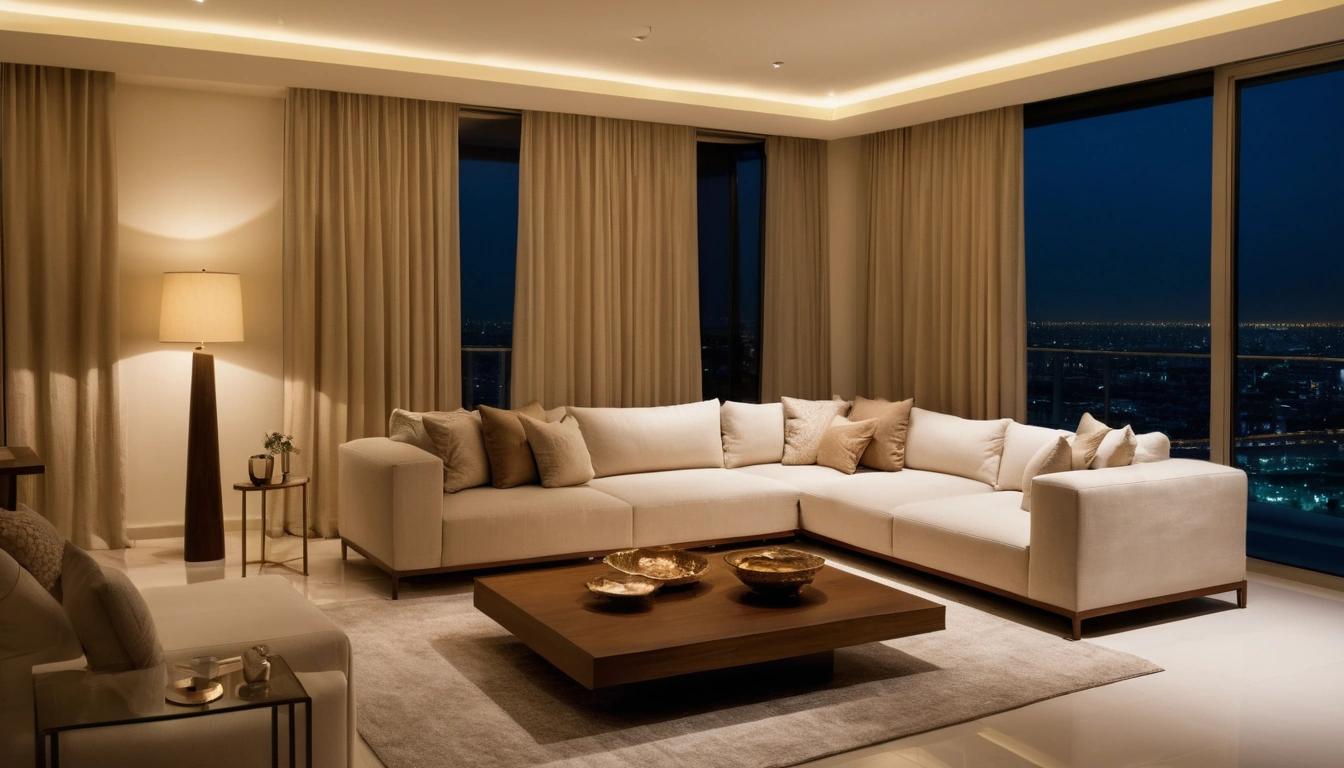
Look up in almost any newly handed-over apartment and count them: a grid of identical recessed downlights marching across the ceiling at even spacing, often in a cool white that makes eight in the evening feel like a dental appointment. Fixing lighting for Dubai apartments rarely requires a rewire or a landlord’s blessing. It requires a different theory of what light is for, then a few well-chosen purchases that put light where life actually happens: at the sofa, over the table, beside the bed.
How the grid got there
Developers light plans, not evenings. Recessed downlights are cheap to buy, quick to install and easy to space evenly across a reflected ceiling plan, and cool colour temperatures read as bright and clean during a ten-minute viewing. The result is illumination as a compliance exercise: uniform, shadowless and indifferent to the difference between chopping onions and reading a novel. Nothing about it is broken, which is the trap; it all works, it is simply working on the wrong problem.
Tenants inherit this and assume it is fixed reality. It is not; almost everything that matters can be changed at the level of bulbs, lamps and plugs.
Before buying anything, learn what you already have. Walk the apartment at night and map which switch controls which downlights; grids are usually wired in two or three groups per room, and discovering that the perimeter runs separately from the centre is sometimes half the battle. A wall of glass matters too, since the lit city outside is itself a light source, and a room with a view earns a dimmer interior than one without.
Three layers, not one ceiling
Lighting design’s oldest rule divides light into three jobs. Ambient light lets you cross the room; task light lets you do something specific, cook, read, work; accent light gives the room shape by making some things brighter than others. A downlight grid tries to do all three with one layer and does none of them well.
The layered version is mostly furniture. A floor lamp behind the sofa and a table lamp on the console take over ambient duty at half the brightness and twice the comfort; a proper reading light earns its corner; a picture light or a lamp washing a shelf unit provides the accents that give the room depth after dark. The grid then gets demoted to what it is good at, cleaning and finding lost keys, and stays off after sunset.
Shades matter as much as sources. A bare bulb at eye level is worse than the grid it replaced, so choose lamps that hide their source behind linen, paper or opal glass, and put the bottom of a table-lamp shade roughly at seated eye height so light lands on laps and pages rather than in faces. Pale walls help too, returning lamplight softly, while very dark rooms swallow it and demand more fittings than you expect.
The 2700K argument
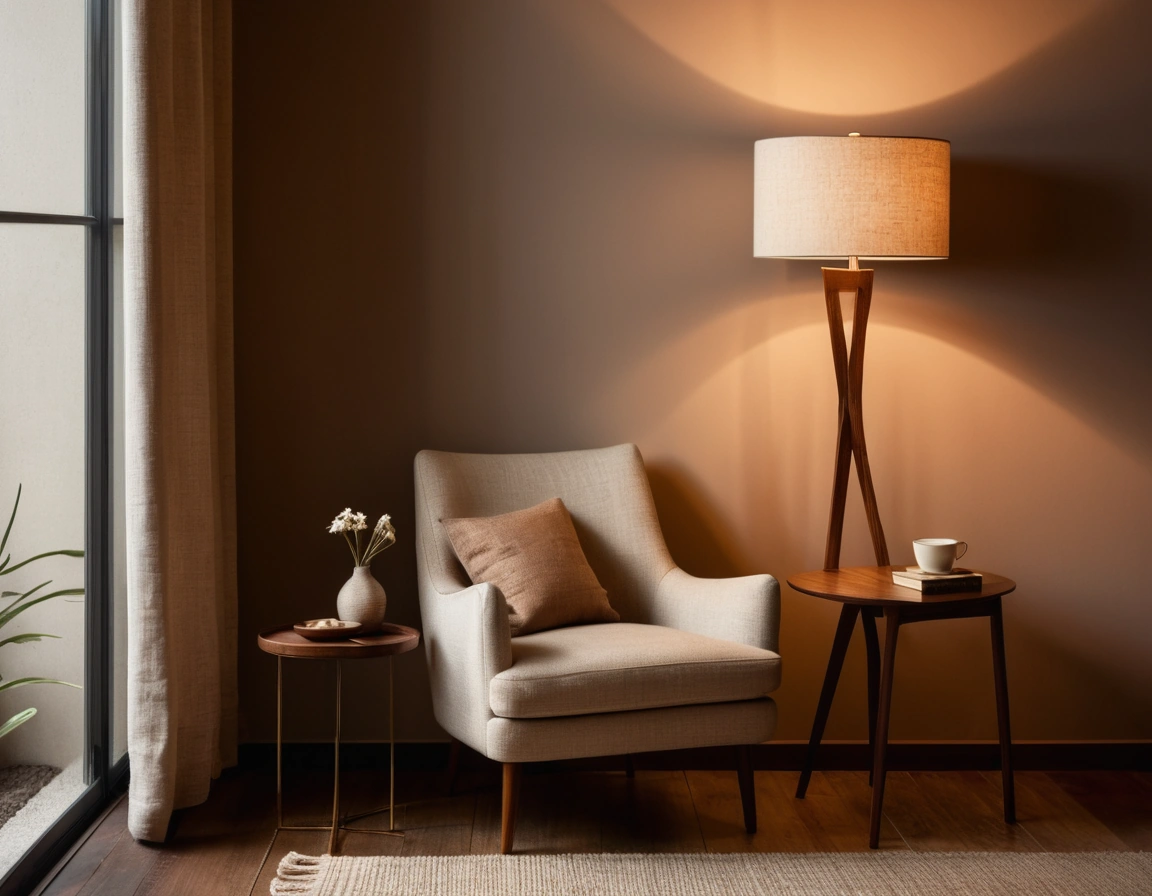
Colour temperature is where discipline pays. Warm white at 2700K flatters skin, timber, brass and food, and it signals evening to bodies that have spent all day under office light; 4000K and above belongs in clinics. The commonest mistake is mixing: one cool bulb in a warm room reads as a fault, like a single note out of tune. Pick 2700K, buy decent lamps with high colour rendering, and change every bulb in the room in one go rather than piecemeal.
Dimming completes it. Smart bulbs put dimming and scheduling into existing fittings without an electrician, plug-in dimmers tame floor lamps, and the difference between a room at full and at half brightness is the difference between a showroom and somewhere you want to stay. Warm light is also kind to interiors built on a desert palette of warm neutrals; cool light greys the same scheme into porridge.
The corners that earn the effort
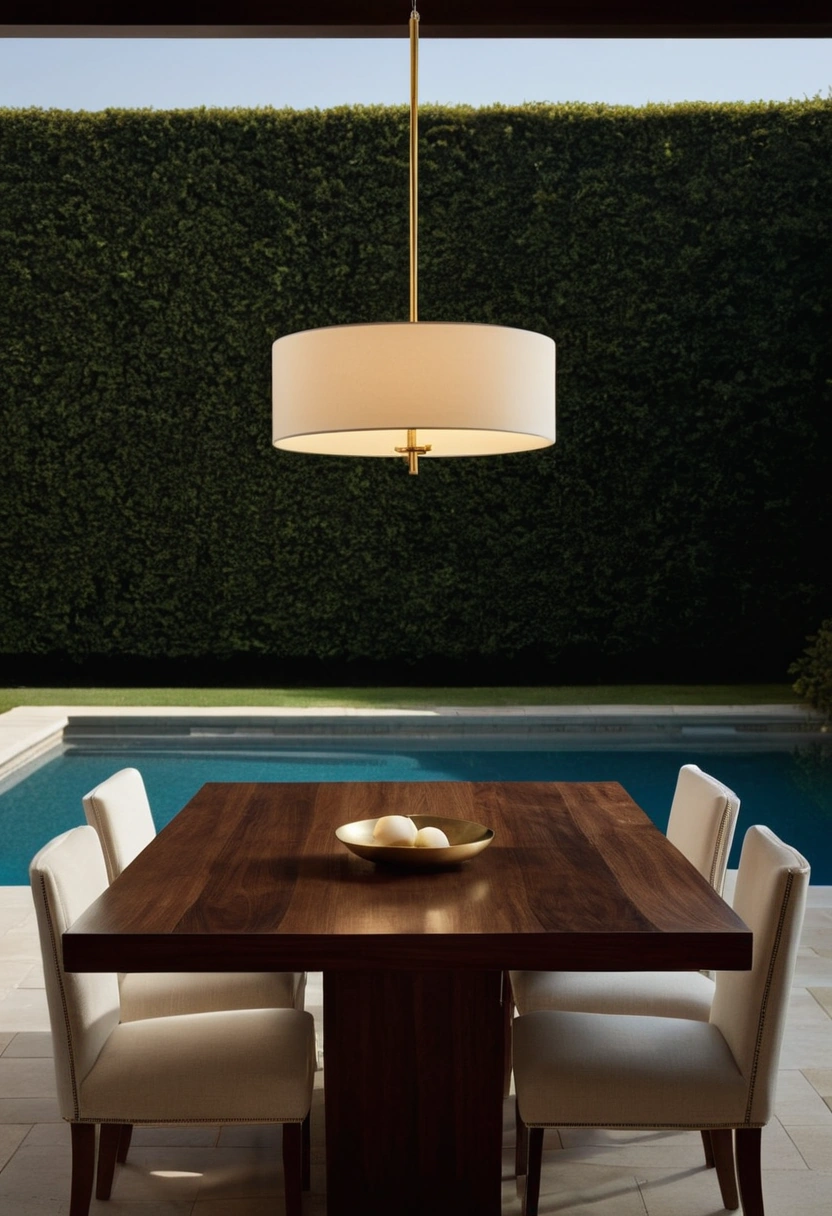
Two spots repay the most attention. The dining table wants a single pendant hung low, commonly somewhere between seventy and ninety centimetres above the surface, dimmed and warm, so the table becomes the brightest thing in the room; renters can fake it with a plug-in pendant swagged from a ceiling hook. The conversation corner, the apartment’s small heir to the majlis, wants overlapping pools from a floor and a table lamp rather than anything overhead, for the same reason a properly furnished majlis corner keeps its light at head height: faces first.
Kitchens and bedrooms have their own arguments. Under-cabinet strips do more for an open kitchen in a sealed apartment than any number of ceiling points, and the bedroom case, lamps, warmth, darkness on a schedule, belongs with everything else that goes into bedrooms designed for sleeping through August.
No rewiring required
Everything above survives a tenancy inspection. Rented apartments rule out chasing cables, but nothing rules out swapping the grid’s lamps for warm dimmable versions (keep the originals in a cupboard for handover), plug-in floor and table lamps, rechargeable cordless lamps for shelves and balconies, stick-on strips under cabinets, and smart bulbs that make the whole arrangement obey one button. The entire kit moves with you to the next apartment, which is more than the downlight grid will ever offer.
The test of success is simple. Stand in the doorway at nine in the evening: if the ceiling is dark, the corners are warm, the table glows and every face in the room looks better than it does in a lift mirror, the grid has been beaten. Light is the cheapest renovation in the city, and the only one that improves every object it lands on.