The Open Kitchen in a Dubai Apartment, Reconsidered
The open kitchen looks generous on a floor plan and smells of dinner at midnight. On extraction that actually extracts, the glass partition compromise, and what closed-kitchen buyers quietly pay for.
, Dubai
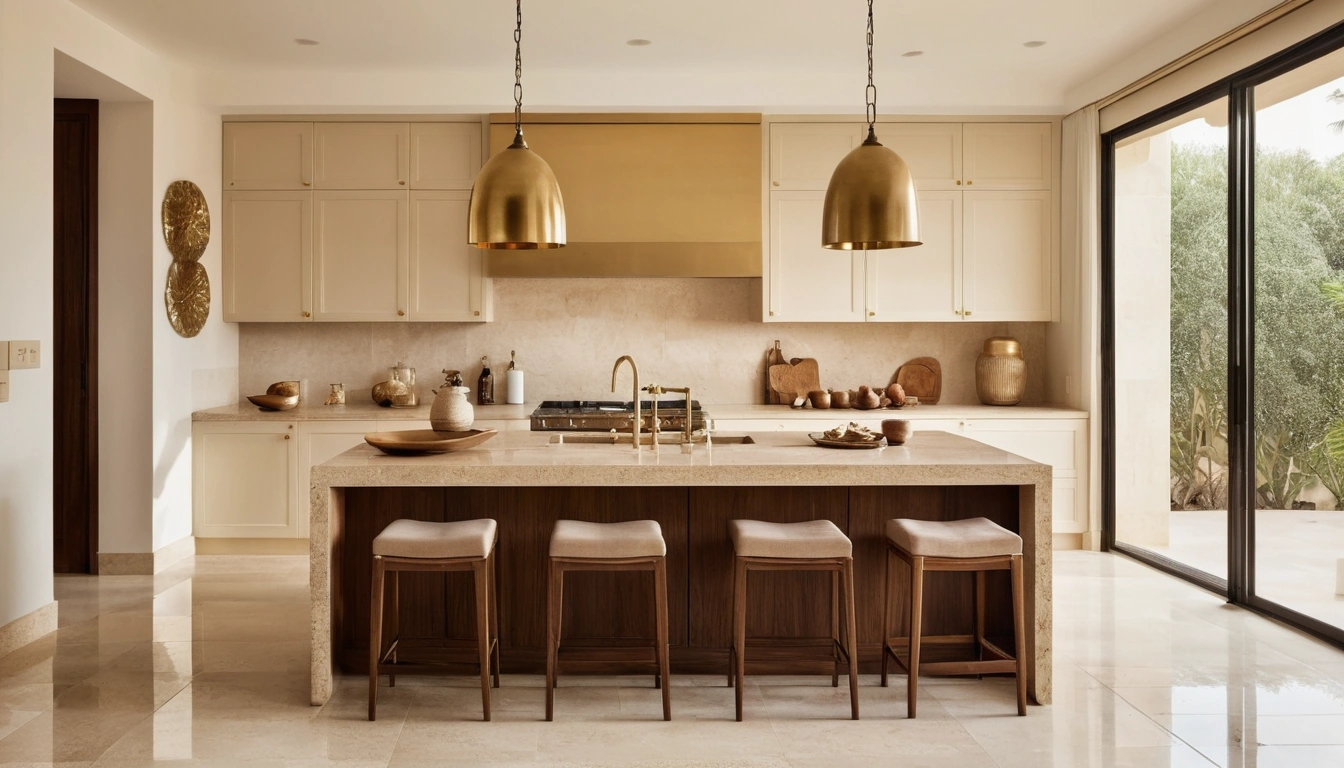
An open kitchen photographs well and smells of last night’s dinner, in that order and sometimes simultaneously. The argument runs worldwide, but an open kitchen in a Dubai apartment is a special case, because the apartment itself is sealed: windows stay shut from May to October, the air-conditioning recirculates the same air all day, and whatever the pan releases has nowhere to go except everywhere. Before knocking through a wall, or paying a premium for a flat where the developer already did, it is worth understanding what the air is actually doing.
A Sealed Box Changes the Maths
Cooking produces smell, steam and an aerosol of grease fine enough to travel. Outdoors, or in a house that breathes, this dissipates; in a conditioned flat it circulates until it lands, and it lands as a faint film on the nearest cool surfaces: cabinet tops, the television, the arm of the sofa you can see from the hob. None of this is dramatic on any given day. Over months it is the difference between a living room that needs dusting and one that needs degreasing, and it is why extraction matters more here than in most of the climates the open-plan fashion arrived from.
Habits move the numbers more than hardware does. Induction throws less heat into the room than gas and leaves the hood a smaller job, lids keep steam where it belongs, and in the brief civilised window of winter an open balcony door achieves what no filter can. For the other eight months the flat is a closed system, and the kitchen is the loudest thing in it.
Extraction, the Honest Version
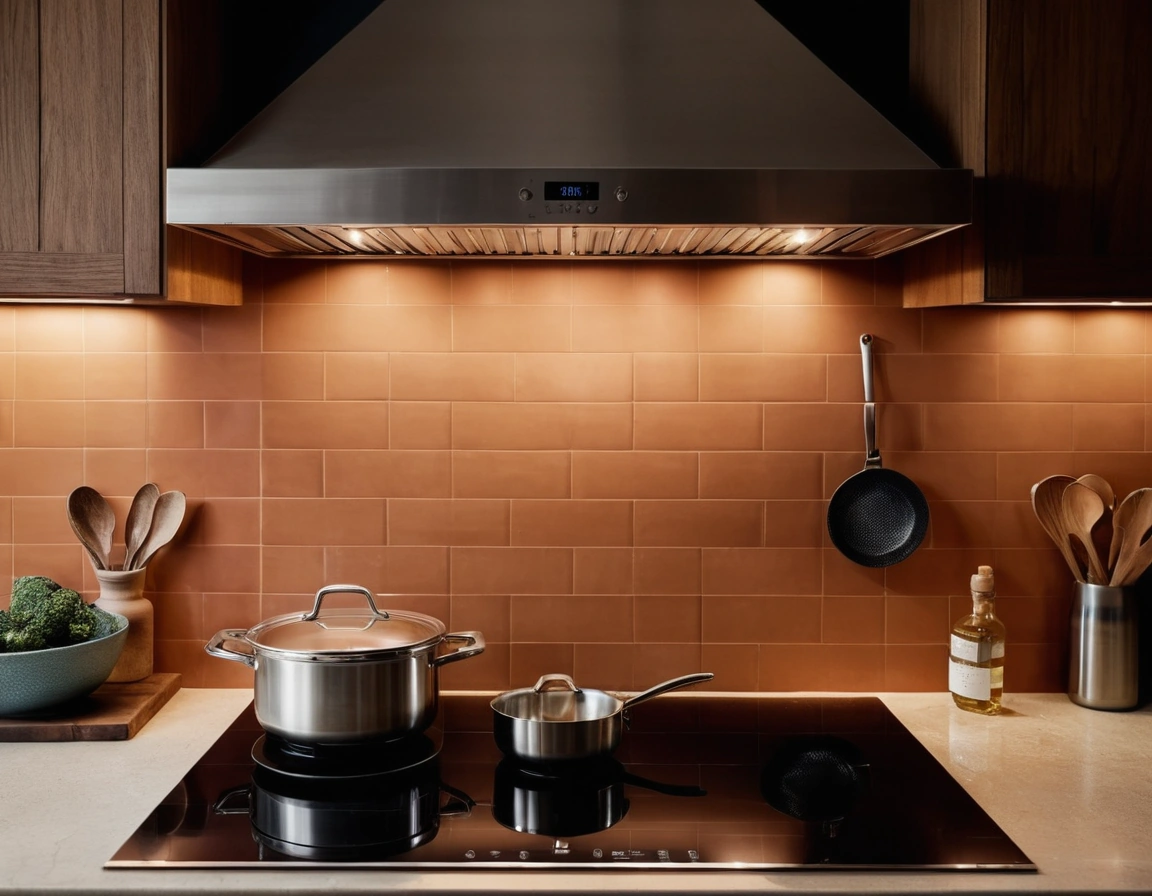
Hoods come in two honesty levels. A recirculating hood pulls air through a grease filter and a charcoal filter, then hands it straight back to the room: it catches a respectable amount of grease, some of the smell and none of the humidity, and its charcoal needs replacing every few months, which almost nobody does. A ducted hood actually removes air from the flat, which is the entire game, but it needs a route to the outside, and in a tower that means an existing extract riser or a facade penetration your building may simply not permit.
Rules genuinely vary by building and developer. Some towers have kitchen extract risers waiting to be used, others forbid any new opening in the envelope, and gas-versus-induction policy differs block by block as well. Treat it all as an approvals question first and a shopping question second: the path runs through your owners association and the municipality, and ten minutes with building management is cheaper than a returned hood.
The Glass Compromise
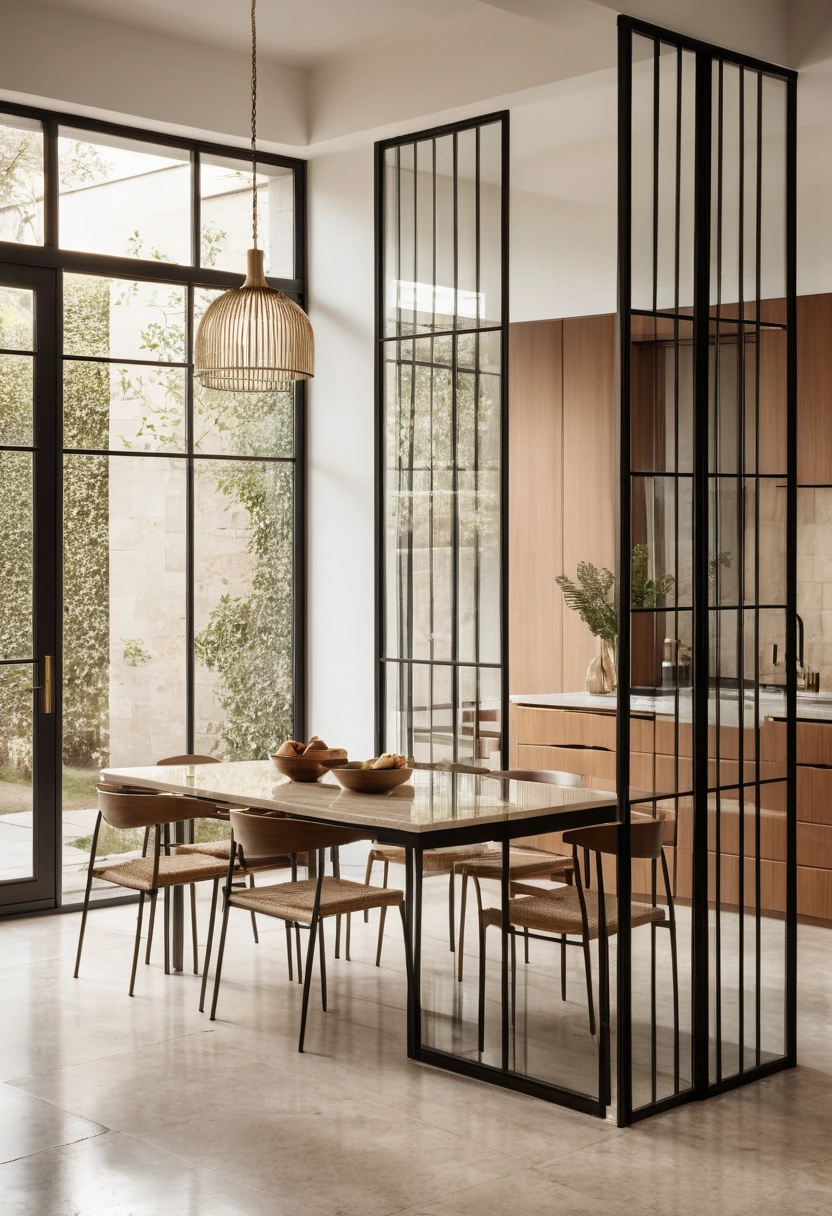
Between the open plan and the sealed kitchen sits the option this market keeps rediscovering: a glazed partition. Steel-framed glass, sliding or fixed with a door, lets daylight and sightlines through while holding the smell, the grease and the blender noise on the side of the glass where they were born. For households that fry daily it is close to the perfect answer, and it converts: open for a party, shut for dinner. Cost sits well above paint and well below a proper wall, usually quoted per square metre and rising with the intricacy of the framing.
The Island as Social Furniture
What people want from an open kitchen is rarely the cooking; it is the island, the piece of furniture the household orbits. Breakfast happens there, homework happens there, guests lean on it holding a drink while pretending to help. For it to work it needs about a metre of clearance on every working side, which in practice means islands belong to genuinely large rooms and peninsulas serve everyone else; the arithmetic is the same circulation logic that governs small flats. Above it, resist the row of identical downlights: a pair of pendants on a dimmer handles the social light while task lighting stays over the worktops, the approach set out in the case against the downlight grid. Underfoot, the island zone earns a floor that forgives spills, which in this market means stone or porcelain and was probably there already.
Resale, Quietly
The open plan is a fashion with a geography. A large share of households in this city cook substantial meals daily and want the kitchen closed for exactly the reasons above, and plenty of buyers and tenants from closed-kitchen food cultures will walk away from a flat where the hob shares its air with the sofa. Listings say open-plan with enthusiasm; the resale market is more even-handed than the photography suggests. The convertible answer holds value best: a kitchen that can close, whether by original wall or well-made glazing, sells to both congregations without apologising to either.
None of which settles the argument, because it was never really about air; it is about whether cooking at your place is a performance or a backstage activity, and most households already know which they are. The air, at least, can be engineered. Check what your building allows, buy the honest hood, and let the glass do the diplomacy.