Sleeping Through August: A Bedroom for Dubai Summer
Good August sleep is engineering: darkness, air, temperature, and the war on small green lights. A practical guide to a bedroom that stays on your side until morning.
, Dubai
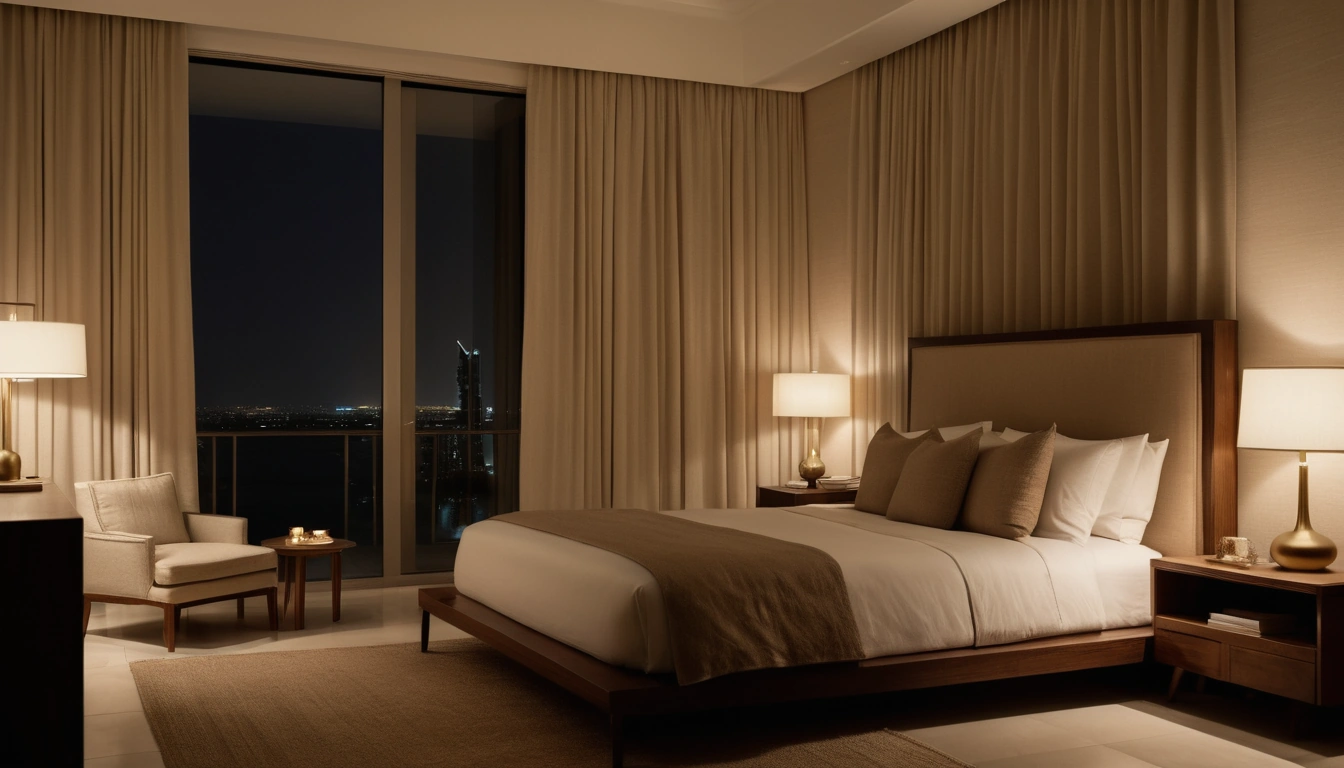
August is the month a bedroom either works or does not, and the difference shows up at three in the morning rather than in photographs. Building a bedroom for Dubai summer is an engineering brief wearing soft furnishings: total darkness against a sun that rises before five, air that moves without moving across your face, a room that has not spent the afternoon storing heat on your behalf, and the elimination of every small electronic light that modern appliances apparently consider a personality. Comfort here is not bought in one purchase; it is assembled from details.
Darkness Comes from the Edges
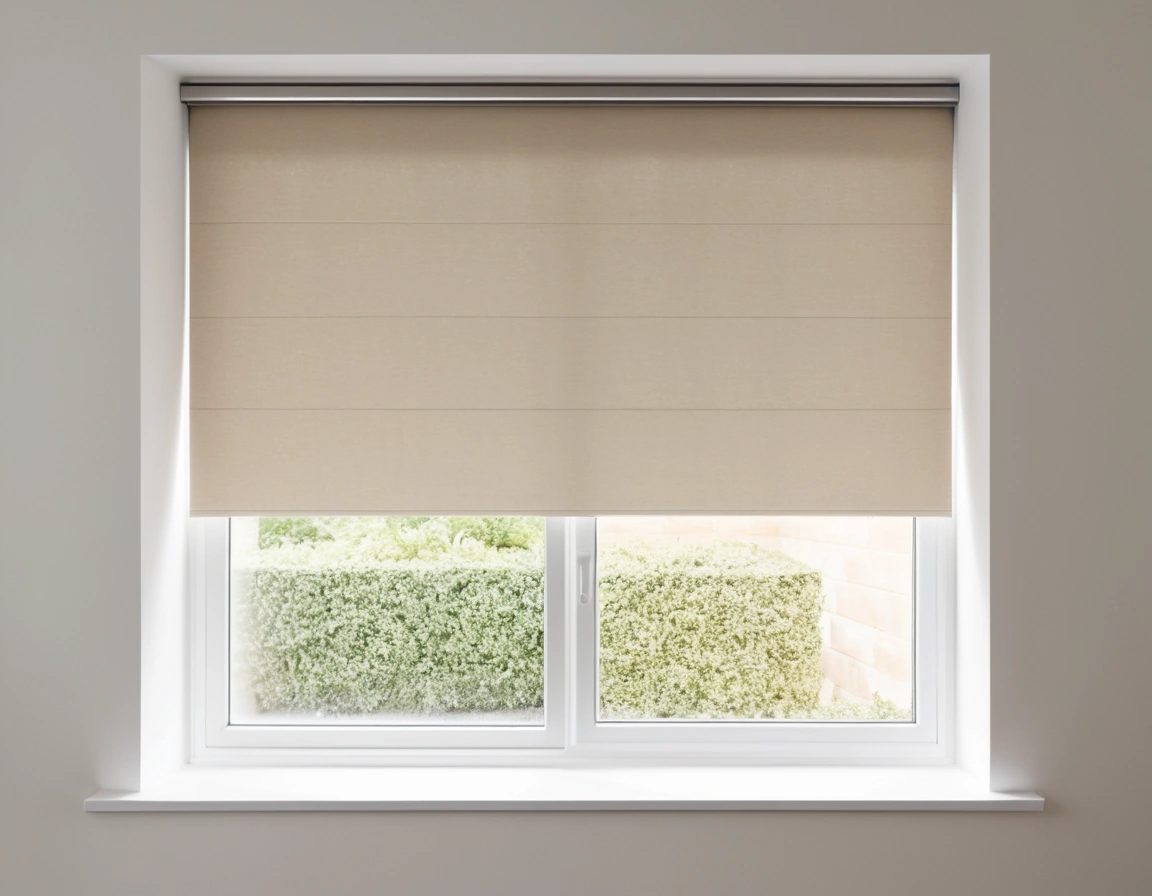
Heavy fabric is not blackout, a lesson usually learned at twenty past five on a June morning. Light does not push through a decent curtain; it slides around it, over the top of the track, down the sides, along the gap at the floor, and the summer sun needs only a slit to draw a bright line across your pillow. True darkness is an edges problem: a blackout roller running in slim side channels so the fabric travels inside a sealed track, curtain tracks that return to the wall at both ends, generous overlaps at the centre, and a pelmet or recessed track closing the gap above. Fabric choice is the last ten per cent; the full curtain and blind playbook covers the other ninety.
Air That Misses You
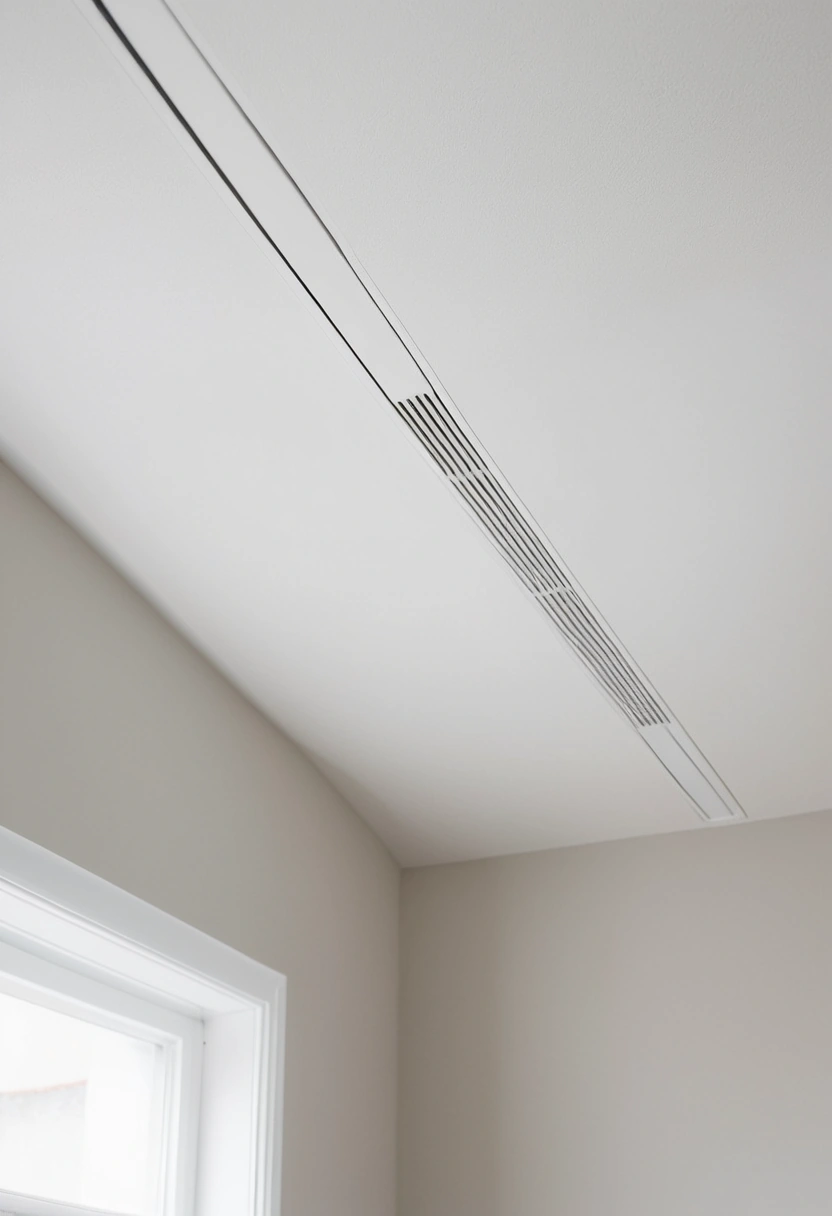
Cold air on your face all night is how the AC ruins the sleep it makes possible: dry eyes, a stiff neck and the four-a.m. blanket negotiation. The vent itself is rarely movable, but its aim usually is. Adjust the louvres or add a deflector so the airstream runs along the ceiling towards the far wall and falls, mixed and gentle, away from the bed; where the room allows it, place the bed out of the direct throw entirely. Noise is the other half of the contract: a bedroom unit should hum, not rattle, and whistling filters or clattering grilles are maintenance flags rather than character, the sort of thing a proper service calendar catches before you have adapted to sleeping badly. On temperature, most people settle somewhere between 23 and 25 degrees; the exact number matters less than holding it steady all night.
The West Wall Problem
A west-facing bedroom spends the afternoon banking heat in its glass and wall, then pays it back to you all night as radiant warmth no thermostat reads. The counters are unglamorous and effective: thermally lined curtains or blinds closed from early afternoon, ideally on a schedule or a motor so it happens while you are still at work; the bed moved off the west wall so you are not sleeping against a storage heater; and, in villas, external shading, because sun stopped outside the glass never becomes your problem at all.
Renters have fewer levers but not none. A lined curtain closed at lunchtime costs nothing, the bed can migrate even where the sockets cannot, and the wardrobe, if it must live somewhere, does its best work standing against the hottest wall, insulation you already own and never think about.
Bedding for a Twenty-Four Degree Room
The paradox of a Gulf summer is that you sleep in artificial mild-spring conditions while the outside runs a fever, so tropical-weight bedding logic does not apply, and neither does the northern duvet you shipped here in a container. A light duvet or a simple coverlet over breathable sheets suits a low-twenties room; natural fibres, cotton percale or linen, handle the sweat-and-chill cycle far better than polyester blends; and couples who cannot agree get two single duvets and a decade of goodwill back. Humidity belongs in a middle band, roughly 40 to 60 per cent, for most people’s comfort. A well-run system usually holds it there without help, and skin, throat and static electricity will all file reports if the room is running too dry.
The Standby Constellation
Kill the lights you paid for and the ones you did not know you bought remain: the charger’s blue-white pinprick, the television’s standby red, the router’s six-lamp display, the AC panel’s own soft glow. Individually trivial, together they form a small municipal skyline, and blue-white light is precisely the wavelength a brain trying to wind down for sleep least wants to see. The countermeasures are proudly unsophisticated: black electrical tape, the most cost-effective interior finish in the flat; sockets kept out of the sightline of the pillow; the phone face down, or better still charging in the hall, where its notifications can twinkle at nobody. What remains should be one warm lamp you actually control, part of a lighting plan that dims properly instead of switching between interrogation and blackout.
Assembled together, these details are the difference between surviving August and barely noticing it. The city outside will still be over forty degrees at midnight; the point of the whole exercise is that nothing on your side of the curtain holds any opinion about that.